2025 - Present
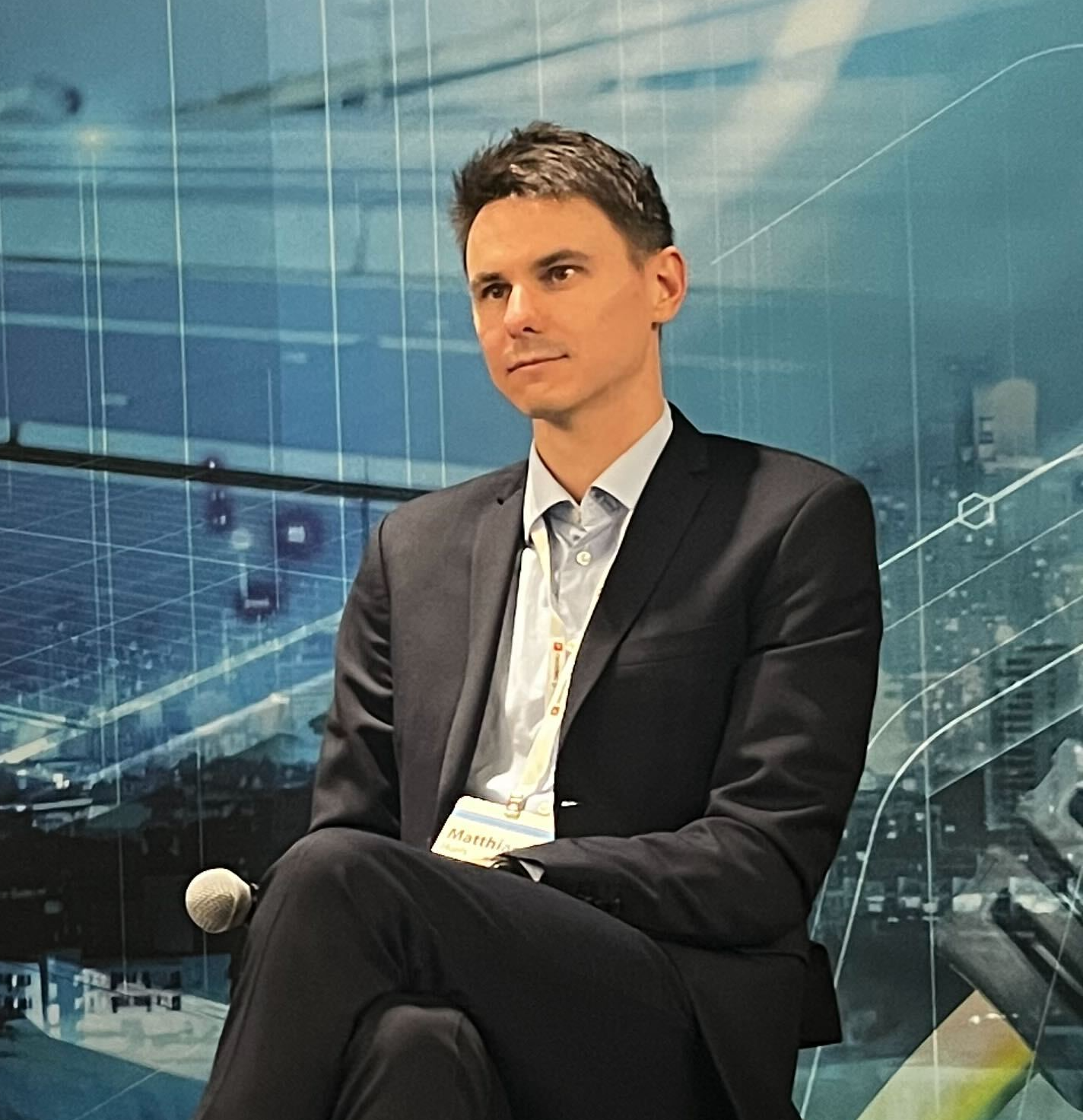
I'm an Applied Scientist, PhD, and Engineer building AI agents for observability at Datadog. Passionate about tackling complex problems where machine learning meets real-world applications. You'll find me running around NYC.
"We have a duty to be optimistic. Because the future is open, not predetermined and therefore cannot just be accepted: we are all responsible for what it holds."— David Deutsch

At EnergyHub, I worked on incredibly exciting challenges in forecasting, control, and modeling of Virtual Power Plants. One of my proudest achievements is inventing Dynamic Load Shaping. It's a system that coordinates distributed energy resources to deliver precise power outputs, rivaling traditional power plants. I developed a custom ML-based model predictive control strategy, and it's been a hit with three of the largest U.S. utilities. You can read more about it in my company blog post and this Canary Media article.
I also helped to modernize our data stack (check out the Snowflake blog post) and developed a simulation environment for electric vehicle charging. This platform allows for virtual testing of managed charging solutions. More on this in the company blog post.

At Hella Aglaia, I realized my passion for AI and dove headfirst into the field. This was my first full-time role where I got my hands dirty with real-world projects. I co-led the AI Solutions group, delivering production-grade machine learning systems.
We focused on deep learning-based optical inspection systems for manufacturing sites, automating real-time detection of process anomalies. This improved consistency and production quality significantly.
I also developed anomaly detection for vehicle telemetry data, boosting first-time diagnostic accuracy to 80%. It was an exciting time, scaling these solutions globally and seeing the tangible impact of AI in action. Check out the company press release for more.
During my time at Siemens Energy, I had the unique opportunity to apply my PhD research directly to real-world engineering challenges. It was incredibly rewarding to witness how my work on non-linear dynamics and optimization could be transformed into practical solutions.
This experience was pivotal in shaping my understanding of AI's transformative potential. Seeing AI-enhanced automated workflows in action for the first time, I fully grasped the disruptive impact AI will have on engineering and beyond.
My PhD research explored the world of non-linear dynamics, specifically focusing on friction-damped vibrations in gas turbines. I developed a comprehensive simulation framework that combines resonance analysis with ML-enhanced evolutionary optimization. This innovative approach allowed for autonomous exploration of vast design spaces, finding optimal blade geometries that would be difficult to discover through traditional methods. Working closely with Siemens Energy's R&D team, I implemented these theoretical advances into practical engineering applications.
If you have 38€ to spare and want to practice your German, you can grab a copy of my thesis on Amazon.

Focused on numerical methods and computational mechanics. Spent most of my time writing solvers for partial differential equations and getting excited about the math behind them. This is where I really got hooked on the intersection of computing and engineering.
Spent an awesome semester in the Bay Area mostly taking grad courses in computational simulation methods. Got to experience the unique Berkeley vibe and a touch of Silicon Valley energy.
Started out thinking I'd be designing machines, ended up falling in love with simulating them instead. Graduated top 3% of the class, but more importantly, discovered that the future of engineering is computational.

My first taste of the American university system. Took a mix of engineering courses and worked on a cool research project. The California weather wasn't bad either! This experience really opened my eyes to the world.

EnergyHub’s “Huels test” asks whether a grid operator can distinguish between a gas peaker plant and a VPP based on their operational characteristics.

A new report from EnergyHub outlines how VPPs can replace peaker plants.

Turing-like “Huels” test pits conventional against virtual power plants
What happens when you take an XKCD joke too literally.

Inspired by the XKCD comic about software dependency towers, this dev created a tool to visualize dependency graphs as physical towers.

A curated list of awesome Go frameworks, libraries, and software. Stacktower is featured in the DevOps Tools section.
I enjoy implementing things from scratch to truly understand the fundamentals. I've started brushing up some older projects and will release them here step by step as I find the time...
View more on GitHub →